Junk Food Bundle: A Playful Typeface for Creative Projects
When you first see the Junk Food Bundle, it feels like a burst of energy. It’s not a quiet, background font. This typeface has personality—a bold, playful, and slightly retro vibe that immediately grabs attention. Think of the lettering on a vintage candy wrapper or the fun, chunky text on a carnival poster. That’s the space Junk Food Bundle occupies. It’s designed to be the star of the show, perfect for projects where you want to inject a sense of fun, nostalgia, and approachable creativity.
Visual Character and Instant Appeal
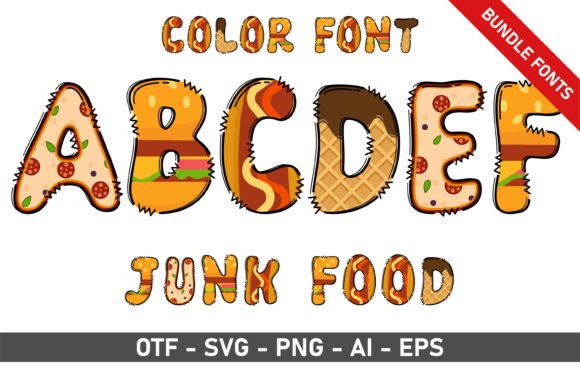
The visual style of Junk Food Bundle is its defining feature. It often presents as a display font, meaning it's crafted for headlines, logos, and short bursts of text rather than long paragraphs. The letterforms typically have a rounded, friendly quality, with a weight and structure that feels solid yet playful. You might notice subtle irregularities or hand-drawn touches that give it an authentic, artisanal feel, distancing it from the sterile perfection of many corporate sans serif fonts.
This creative font carries a distinct personality. It’s approachable, energetic, and a bit whimsical. It doesn’t take itself too seriously, making it an excellent choice for brands and projects that want to connect with audiences on a human, relatable level. The overall appeal lies in its ability to communicate joy and simplicity without sacrificing visual impact. It’s a premium font that feels accessible, a combination that’s valuable in today’s design landscape.
Where This Font Truly Shines
Understanding where a font like Junk Food Bundle excels is key to using it effectively. Its strength lies in applications where personality and immediate recognition are paramount.
In brand identity and logo design, this typeface can be a game-changer for the right business. Imagine a local ice cream parlor, a craft soda brand, a children’s boutique, or a quirky food truck. The Junk Food Bundle immediately communicates a brand personality that is fun, friendly, and memorable. It sets a tone before a customer even reads the menu or tries the product. For packaging design, especially for snacks, treats, or artisanal goods, this font can make a product jump off the shelf, creating an emotional connection through its playful aesthetic.
Beyond food, it’s a powerhouse for editorial design and publishing. As noted, it’s a natural fit for children’s books, where its whimsical, colorful nature creates an engaging reading experience. But think broader: magazine headlines for lifestyle or entertainment sections, book covers for cozy mysteries or romantic comedies, and eye-catching chapter titles. In the digital realm, it brings life to social media graphics, YouTube thumbnails, podcast artwork, and website hero sections. It’s a font that stops the scroll because it doesn’t look like everything else in the feed.
For entrepreneurs and small business owners, Junk Food Bundle is a versatile design asset. It can unify a marketing campaign across flyers, posters, and digital ads. It’s perfect for creating branded materials like thank-you cards, stickers, or promotional posters for local events. Crafters and hobbyists will find it invaluable for personalized projects—think custom greeting cards, invitation suites for birthday parties, or unique apparel designs using a cutting machine.
Making It Work: Practical Guidance for Designers and Creators
Choosing a font is only half the battle. Using it well is what separates good design from great. Here’s how to approach the Junk Food Bundle in your workflow.
Evaluate the Project Fit. Before you commit, ask: Does this project call for a loud, cheerful voice? Junk Food Bundle is a display font, so it’s not for body text. It’s for making a statement. If your project requires utmost formality or quiet elegance, this might not be the right tool. But if the goal is to evoke warmth, nostalgia, or playful energy, you’re on the right track.
Master Font Pairing. This is crucial. Because Junk Food Bundle has such a strong personality, it needs a partner that complements without competing. A clean, neutral sans serif font (like Helvetica, Open Sans, or Lato) for body text is a classic and reliable pairing. It provides a calm backdrop that lets the display font’s character shine. For a more sophisticated or vintage feel, you could pair it with a simple serif font. Avoid pairing it with other highly decorative or script fonts, as this can create visual chaos and reduce readability.
Review the Included Styles. A good font bundle often includes variations—bold, outline, italic, or shadow versions. Check what’s included. Using a bold weight for a main headline and a regular weight for a subhead can create a simple yet effective visual hierarchy. The black, solid version is your workhorse for most applications, while outline or shadow versions can add flair for special elements.
Prioritize Readability and Licensing. Always test readability at the size it will be used. A font that looks great large on your screen might become an illegible blob on a small mobile banner or a distant poster. Scale it down and view it from a distance. Furthermore, understand the licensing. The provided note is critical: the color version has software limitations. For projects involving Cricut or other cutting machines, you must use the black OTF/TTF files. Always ensure you have the correct commercial font license for your intended use, whether it’s for a client project, merchandise, or a personal blog. When in doubt, refer to the foundry’s license agreement.
Ultimately, the Junk Food Bundle is more than just a collection of letters. It’s a tool for storytelling. Used thoughtfully, it can elevate a brand, captivate an audience, and inject a much-needed dose of fun into a design. Its value lies not just in its style, but in its ability to connect on an emotional level—a powerful asset for any creative professional.